Monday, December 6, 2010

Doris Bittar- The Blending of Cultures

by Chelsea Brown

We as Americans are used to seeing the image of the American Flag everywhere. It is the ultimate sign of patriotism like any country’s flag. It is a symbol of pride and the American spirit. More recently, in modern and contemporary art, the symbol of the American flag has been co-opted to represent other things.
 Abstract Expressionist painter Jasper Johns turned the image of the flag into a pop art icon, much akin to Andy Warhol’s silk screen prints of a Campbell’s Soup can.  The appropriation of American symbolism has since been a topic of popular debate among artists and art historians alike.
 A contemporary and rather controversial artist to do this is Lebanese American artist Doris Bittar. Bittar’s work is unique in that she frames the American flag and other Western icons from a distinctly Arab American standpoint.  She weaves together American, European, and Middle Eastern cultures through her images. She uses Arab, and more specifically, Islamic imagery to frame and to comment upon American values and icons. 

When asked about her work, Bittar states that she uses colonialism as one of her main influences. When the Gulf War happened in 1991, Bittar felt alienated. As an Arab American, she saw her friends and even family members have a very pro-American one sided view of the war. As an Arab American, she is caught between the two cultures. Since then, she has never gotten rid of the feeling of alienation. Her use of distinctly Islamic motifs on American imagery conveys this confliction within her identity.  She sees the rest of the world, and specifically America, through the cultural lens of an Arab American. She is not unpatriotic, like the concept mentioned in Ella Shohat and Robert Stam’s book “Flagging Patriotism” defines, nor is she xenophobic. She is simply trying to navigate the idea of what it means to be an Arab American post-gulf war and 9/11. 


Bittar’s work challenges the idea of what it means to be an American. The American icons of apple pie, baseball, and above all, the American flag are nostalgic symbols of Americanism.  America no longer embodies the idea of “Main Street U.S.A.” with white heteronormative practices of the nuclear family and success through hard work (if it ever actually did). Times are changing- and the immigrant story is becoming more and more relevant. Hyphenated identities are becoming the norm and in turn, what it means to be an American. Bittar’s unique and witty combinations of American and Middle Eastern imagery are the visual interpretation of the hyphenated identity of an immigrant. As an immigrant who came to the U.S. when she was 6 years old, she is struggling to take hold of her Lebanese identity as well as the American one. She is visualizing the struggle between these two cultures in her paintings. Her story is just one out of the millions who have immigrated here. 
Bittar’s work also recognizes the personal struggle of individuals, both here in the U.S. and abroad. Her series Coffee Stories, recognizes the story of the individual through the common, but personal practice of making coffee. Her work bridges the gap between the stories of the millions to the uniquely personal story of the individual. This is in addition to the bridging and combining of cultures through the combination of popular cultural imagery. 


To see more of Doris Bittar’s work, check out her website and the Youtube video below.


Bibliography

Babaie, Sussan. "Visual Cultures of Islam." Ann Arbor. Winter 2008. Lecture.

"Doris Bittar." Welcome to DorisBittar.com. Web. 08 Dec. 2010. <http://www.dorisbittar.com/>.

Potts, Alex. "Modernism and Abstract Expressionism." HistArt 272. Ann Arbor. Fall 2009. Lecture.

Stam, Robert, and Ella Shohat. "Preface." Flagging Patriotism: Crises of Narcissism and Anti-Americanism. New York: Routledge, 2007. Print.

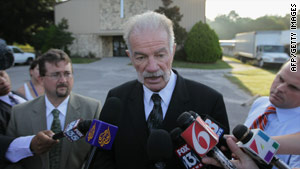
They are Welcome in Whose Country?

by Matthew Carlos Vargas Stehney

“We have nothing against Muslims, they are welcome in our country, they are welcome to worship, we have freedom of religion, we have freedom of speech…they are welcome.”
-Reverend Terry Jones on why he is going to burn the Qur’an.  


  Recently, a crazy person hijacked the media spotlight and directed it to his small church in Florida, whose congregation was planning to have a Qur’an burning celebration on the ninth anniversary of the terrorist attacks of September 11, 2001.  The Reverend Terry Jones and the members of the Dove World Outreach Center in Gainesville, FL felt that burning the most sacred book of the Muslim faith would be a statement against Terrorism. What many have overlooked is that, through the above quote, Reverend Jones not only brings into question the legitimacy of burning the Muslim holy book, but also brings into question American subjectivity and citizenship.  Unfortunately for many Muslim Americans, the 9/11 attacks further removed them from the realm of the American subject.  Muslim and Arab Americans have been essentialized as inherently outside the boundaries of what is American.  However, a question arises from quotes such as this: when does ‘their’ become ‘our?’  If a Muslim becomes an American citizen, or is born an American citizen, or whose grandparents were born American citizens, or is an American citizen who became Muslim; is what they do not then essentially American?  Not according to the good reverend, or to a large number of Americans for that matter.  They are welcome in our country.   This implies that Islam cannot be American, and therefore its adherents are only visitors, or immigrants, but not Americans. Muslim and Arab Americans have had to remind the public that they are also Americans, and were also attacked on 9/11.  According to scholars Anny Bakalian and Mehdi Bozorgmehr, following the 9/11 attacks, “Middle Eastern and Muslim American leaders…proactively claimed the rightful place of their constituents in American Society,” and advocated for American Muslims and Arabs from a civil rights platform.  This platform is inherently American, operating from within American political and social framework to declare rights as Americans.  To these leaders, this is not a conflict between American interests and their own, it is a declaration of rights as American subjects.  Bakalian and Bozormehr also cite a post 9/11 study where Americans who displayed the American flag were polled on their reasons for doing so. While various reason for displaying the flag were given, “the authors [of the poll] found a positive correlation between displaying flags and having negative stereotypes of Arabs…some even saying ‘I would like to exclude Arabs from my country,’” despite the fact that many Arabs and Muslims were displaying the same flag at the same time.  Is it not their country too? Doesn’t an Arab or Muslim American citizen have just as much a right to say they don’t want someone in their country (the US, if you have yet to catch on)?  That is the essential debate prompted by the opening quote of this post.  It is impossible to say that Muslims are one way while Americans are another, if you are including Muslims who are also Americans in your statement; it’s a logical fallacy.  What Reverend Jones et al fails to realize is that if a Muslim American prays five times a day, then praying five times a day is an American practice; if a Muslim American goes on Hajj, the annual Islamic pilgrimage to Mecca, then going on Hajj is an American practice.  Of course, not everyone’s Americanness can be questioned, a white Christian citizen could never be excluded from American subjectivity, regardless of when their family came to this country, or what they did to it.  Would Terry Nichols or Timothy McVey ever cause Christianity or whiteness to be cast from what is essentially American?  While many would like to believe that whiteness and Christianity are the foundation of American subjectivity, *cough – Tea Party – cough* no American citizen has the right to declare dominion over what is considered American, over the interests of other American citizens. That is the imaginary beauty of the American experiment: equal citizenship under the law.  Unfortunately, the American subject has been racialized or essentialized at every point in its history, to the exclusion of others, despite the fact that the rhetoric of American ethics and morals contradicts these exclusionary practices.  Will the “melting pot” or “mixed salad” ever actually describe America?

See Also:
 Bakalian, Anny and Mehdi Bozorgmehr. Backlash 9/11: Middle Eastern and Muslim Americans Respond. Berkeley: University of California Press, 2009.
CNN. Preacher Wants to Burn Qurans. Interview. http://www.youtube.com/watch?v=05t17RNjGYA: CNN, 2010.

Healing Through Music


There are many ways that Arabs and Muslims have dealt with the aftermath of September 11th, and one of the most entertaining is through music. Iron Sheik is a Palestinian rap artist who uses his music to make political statements on various problems he sees in modern society. He has rapped about most everything, from getting searched at the airport to the quest for oil, and he even has a song called “Conversation with Edward Said.” Edward Said is a famous scholar, best known for his work titled Orientalism, which was revolutionary in depicting the way Western culture perceives Middle Eastern culture. In Orientalism he criticized how definitions of the Orient created a binary between Western and Eastern culture. “Orientalism can be discussed and analyzed as the corporate institution for dealing with the Orient- dealing with by making statements about it, authorizing views of it… in short, Orientalism as a Western style for dominating… and having authority of the Orient” (Said 69). Here he is stating that by labeling and critiquing the Orient, Western powers are establishing an authority over the region, therefore gaining all the power. Iron Sheik responded to Said’s ideas, and applied it to the occupation in Palestine. In his song “Conversation with Edward Said” he intermingles quotes of Said’s with his own lyrics, and makes a very powerful song. He slams the United States’ support of Israel, and criticizes their lack of help towards all of the Palestinian grievances.
 Iron Sheik’s real name is Will Youmans, and he just so happens to be a graduate of the University of Michigan, and is currently working on his PhD there. He also received his law degree from the University of California at Berkley. He was born in Detroit, and has made quite the name for himself not only as a rapper, but a scholar as well. He has performed all over the world, and has had featured in many prominent news outlets, including the New York Times. In a review of one of his performances, author Danny Hakim wrote:
“And then Mr. Youmans began a set that substituted political statements for the four-letter words of other raps. He extolled the festivalgoers to get out of the bleachers and crowd the stage. He invited their reactions to various hot buttons, asking, ''Who here likes Fox News?'' and jabbing with banter like: ''The next song is about George W. It's called 'Low Expectations.'” (NY Times 07/08/2004). He is very liberal, which can be seen through his lyrics, and unlike a lot of other rappers, he has extensive knowledge to back up what he talks about. In this video clip, it shows Will Youmans on a news program and he raps about the violence and displacement that is taking place in Palestine:

As you can see, he is very knowledgeable about what is happening abroad, and he is using his music to get the word out to a broader audience.
            All in all, the Iron Sheik has a good message for those who will listen. He wants peace for the Middle East, particularly Palestine, and his awareness of the issues make his arguments even more valid. And he is a Michigan Wolverine, so he obviously is very intelligent. Music is a great outlet for people dealing with grievances, and maybe if more Arab or Muslim Americans used this medium then their injustices could be addressed. The more the word gets out there, the more the Western/Eastern binary of us versus them can be disintegrated. September 11th was a horrific tragedy, but why doesn’t the United States address the tragedies they are imposing on Palestine. The Iron Sheik wants to get the message out, and chose rap as his way to this. What will you do to make more people more aware of the problems that you see in the world? Just something to think about…


Caught Between Worlds: An Arab-American Journalist Wonders Who “We” Are

In the weeks and months after 9/11 journalists were still scrambling to pick up the pieces of what happened on that disastrous day, how to adequately cover and investigate the tragedy, and how to handle all of this challenging work while still adhering to the ethical and moral principles of journalism.  For one Arab-American journalist in particular—Raghida Dergham—the task of balancing hard journalism with one’s own take on the 9/11 tragedy, on the world it happened to, and the response needed to help make amends for it, was as difficult as anything she’d ever faced.  
In an article she wrote and published in Newsweek International on October 15th, 2001, Dergham decided to start at square one in order to clarify her view of 9/11, and any cultural responses to it, as accurately as she could.  She was born in Lebanon but had lived in New York City for most of her life.  She’d long been utilized by her employers, newspapers, television shows, online news services, as a liaison between the Arab world and culture she inherited at birth, and the American way of life and perspective she helped inform every day as a journalist.  That said, after 9/11, she felt as though the media was taking some disturbing turns for the worst in terms of the ways in which the “Arab world” and Arabs in general were being portrayed and simplified for an impatient and, she thought, vengeful American audience.  
Essentially, her 9/11 response piece detailed the many ways in which she felt the increased visibility of Arabs on the American news was being billed as something healthy and constructive, but felt more like a way of helping Americans learn about their newest “enemy.”  It is interesting to note the keen observation and near prophecy of her words, as this same issue of how negatively Arabs are portrayed in the media in the wake of 9/11 rages today in ways that took most years to recognize, and empathize with.  For Dergham, even a month after 9/11, she felt this kind of mistreatment by the American media was something of a foregone conclusion.  Her informed, journalist’s response to 9/11 as an Arab-American was one more of helplessness than of anger or mistreatment.  
She writes in this same piece of how proud she was to see a taxi driver shortly after 9/11 still brave enough to have verses from the Koran hanging from his rear-view mirror.  She also comments on the changes she notices to her daughter’s nightly prayers following 9/11.  Upon overhearing her daughter pray, requesting: “God, please capture them and bring them to justice so we can have a normal life again,” Dergham wondered who her daughter thought “them” and “we” were exactly.  More somberly, she wondered what informed her daughter’s understanding of “them” and “we.”
Still, despite the relatively helpless and directionless feeling Dergham was left with after 9/11, she responded to the tragedy by doing what it is she has always done best.  She embraced her role as a liaison between American culture and the Arab world, because, for better or worse, her unique role and opportunity to create appropriate responses and cross-cultural discourses in the media is more important now than ever. 
She concludes her piece by addressing her American audience directly, noting that all Arabs do not hate Americans, and the media should not propagate this myth, nor should the American people respond to 9/11 as though it’s true.  Then she addresses her Arab followers by saying ominously that “Americans do not know you.”  They don’t know how similar your culture is to theirs, nor do they know how to solve the problems stemming from 9/11 that allow the two worlds to talk past each other, and remain ignorant to one another’s true characteristics.  She ends on this somber note but there is still a note of hopefulness in her response to the post-9/11 media.  
One can imagine her writing that phrase: “Americans do not know you” and finishing her article with her eyes fixed downward at the sad truth before her.  Yet, as she instructs both Arabs and Americans to do in response to 9/11, she probably lifted her head once more to the world she hopes to heal, to the cultures she hopes to re-unite, and kicked herself for not ending that sentence of hers with the word: “yet.” 

Park51- An Artistic Response to 9/11

American Response to Park51 Design
by Chelsea Brown

Nothing has been the subject of such extreme controversy like the Park51 Community Center, soon to be located in lower Manhattan in New York City. Also known to the public as the “9/11 Mosque”, it will take over a small part of Manhattan that was destroyed on September 11, 2001. Those who oppose it believe it is in poor taste to put an Islamic Mosque “right next” to a spot that caused so much trauma to the American people. These are the same people who believe that Islam and its followers, a usually very peaceful and understanding faith, were solely to blame for the atrocities that day.
Many Americans, and especially those who call themselves Christian, see Islam and the Middle East as binary oppositions. Even though both faiths share many of the same values, they are seen as binary opposites to each other. This is why Park51 has been the subject of a large controversy. The reasoning behind this fear is called “orientalism”, a term coined by theorist Edward Said. The Middle East and Asia, at least to Europeans and Americans, has always been shrouded in mystery. Due to its geographical location and difference in culture, many westerners just assume that the “East” is just farther behind in culture and technological advances. The East, for many people, will always be a dark land of snake charmers and exotic women. This sort of ignorance is what leads people to fear Islam and those from the Middle East, and now, the Park51 Community Center. 


Park51 will not only serve as a religious center for Muslims, but as a content and culture rich community center. It will have language courses, an indoor pool, and even a fitness center. The worship center will be a small part of what it has to offer to the surrounding community, yet people see it as an imposing Mosque moving in on the sanctity of Ground Zero. A large reason that certain people oppose the project is that its design draws influence from traditional Islamic Architecture. It is not distinctly Islamic in any particular way, but its slight influences are rather obvious. SOMA Architects, the consultant firm that drew up initial sketches, designed a building that was light and airy- a building that would feature large open windows and bright white marble or stone on the exterior. The structure is not imposing, but a bright symbol of hope for the community.

The exterior is reminiscent of a Mashrabiya, or a stone-cut sunscreen seen in many examples of Mughal architecture (16th- 19th Century). The asymmetrical and jagged star cutouts are reminiscent of the eight pointed star seen in many examples of Islamic architecture and art throughout the Middle East. Islamic art cannot have human representation in any of its forms, so often times, artists and architects would resort to geometric designs and flowers. This star in particular is sometimes known as a “Seal of the Prophets” and is a very popular symbol for Muslims around the world. Park51’s screen cut design is reminiscent of this symbol, but it is not actually located anywhere on the design. Some people have also said the star cutouts also look like the Jewish Star of David and similar Christian star symbols seen in the Bible. The pattern is generic and sporadic; one cannot designate the actual origin of the design.
The images of the proposed design of Park51 have popped up all over the internet and news. People have seen its design and have called it inherently Islamic in nature, which wasn’t the goal of the architects. The goals of Park51 are community-oriented. The cross-cultural design of the structure is to promote understanding and a sense of unity between the three major religions in America. The building will not only bring about cultural and community unification, but it will revitalize a part of Manhattan that is lying dormant and unused. Park51 will revitalize the community, both in faith and in practice. 

To keep up on news concerning Park51, please visit their blog.  

Bibliography 
Babaie, Sussan. "Visual Cultures of Islam." Mughal Architecture. Ann Arbor. Winter 2008. Lecture.

 Bloom, Jonathan, and Sheila Blair. Islamic Arts. London: Phaidon, 1997. Print.

 Park51. Web. 08 Dec. 2010. <http://blog.park51.org/>.


Said, Edward W. Orientalism. New York: Vintage, 1979. Print.

Park51- An Artistic Response to 9/11

Part 3- Ground Zero Mosque: An Artistic Response to an American Tragedy
By Ben Verdi
               Much has been said, written, screamed by protesters for and against the construction of the Park51 Cultural Center (formerly known as the Cordoba House) that is planning on opening its doors in roughly four years in downtown Manhattan.  The center is controversial because of the ways in which people believe it is infringing on “hallowed ground” (Ground Zero, where the World Trade Center once stood) and is in some ways seen as a sign of more Muslim aggression against the hearts and minds of New Yorkers, and all Americans who are still grieving over the tragedy of September 11th, 2001. 

                But, while controversy has stirred debates and fueled passions of people from the media to the middle of lower Manhattan’s streets, one key part of this cultural center (which it seems we’ve all agreed to ignorantly call a Mosque) is being overlooked.  That is the fact that Park51 will have within its walls one of the first true memorials to the 9/11 tragedy.  Now, some may call this a political decision in order to win the support—or at least reduce the protests—of people who think this cultural center is offensive to their American patriotism and to a ground that looks as destroyed and awful as it does “because of Islam.”  Some may even go as far as to say this small memorial within the $100 million dollar walls of the center is actually a sign of how little Muslims care about the grieving process that many are still clearly going through post-9/11.  But what few seem to be thinking about is the ways in which this 9/11 memorial, and this cultural center in general, might be re-interpreted as incredibly soulful, artistic and (ironically) American responses to such a horrible national tragedy.

             For instance, the claim that the Park51 Center is somewhat of a slap in the face to the people who suffered on 9/11 is quickly undone when we consider how many Muslims were also killed on September 11th, 2001, innocent victims murdered as painfully and senselessly as any white, black, Jewish or Christian person was that day.  Also, beneath the not-so-veiled bigotries of those who oppose the construction of the center lies a unique opportunity to see this Cultural Center as an amazing and artistic step forward for Americans going through that grieving process they claim is still needed in the wake of the tragedy.

            Think about it, although the project is costly, and will produce a beautiful, state-of-the-art gym, restaurant, pool and theater, Park51’s construction could almost be read as a humble step towards reconciliation, a sign that sensible, American Muslims want closure after 9/11 as well, and want to revitalize a community, a faith and an aspect of American culture, (that aspect being unity) that was so devastated by people who claimed to believe the same things they do.    

Thus, the center’s proposed 9/11 memorial, a project for which Park51 is actually still seeking local artists, is not only going to help reconcile still-grieving New Yorkers with the peace of mind they desire, but will also serve as an artistic means of re-including Muslims under the umbrella identity of “American." 
And in about four years the people of downtown Manhattan will see that the Park51 Cultural Center not only houses a memorial to a tragedy that caused more pain than any in the history of America, but, shining, brilliant (and eco-friendly), the building itself is a bit of an American Muslim response to 9/11 that is as classically American as it is peacefully Muslim.
We cannot change the past, so let’s move on together, and progressively help one another create beauty and hope and rejuvenation once more in the area of our country that we all agree needs it most. 

Park51- An Artistic Response to 9/11

Part 2- Revamping Ground Zero to Spread Awareness
By Elle Mastenbrook

The controversy over the proposed mosque near Ground Zero has been widely publicized, and there are many different opinions surrounding the construction of it. The developer, Sharif el-Gamal, worked with SOMA Architects to come up with the creation of design. According to the project’s website, www.park51.org, their vision is as follows:
“Park51 is a center created to serve the local community through recreational and cultural activities and social programs and to integrate the Muslim-American identity into the fabric of the United States. We are guided by Muslim values, including understanding, mutual respect, service, transparency, peace, harmony, education, health, equality of women, excellence and sensitivity to our environmental impact. Our goal is a self-sustaining, international-standard model.”
This post is created to discuss beneficial aspects of the proposed mosque, and how it is not just an Islamic Center, but also a structure that could be advantageous to all citizens of New York City. According to the website, the facility is intended to be a community center, and is planned to include: recreation spaces, an auditorium, a restaurant and culinary school, cultural amenities, education programs, a library, childcare services, a prayer space open to all members of the New York community, and a September 11th memorial space. What is interesting is that the website does not specifically identify the prayer space, named the Cordoba House, as a mosque. Yet the term mosque is what is highlighted in many of the media reports on this structure. They do acknowledge that the Cordoba House will be developed under the leadership of Imam Feisal Abdul-Rauf, but other than that there is a noticeable lack of any religious connotations the religious space in the community center has. 
New York City does not need another gymnasium or restaurant, but Park 51 is going to bring more than that. It is going to be a tranquil space that promotes peace. It is not intended for pushing Islam on its patrons. It is meant as a place of reflection, and is a tribute to the attacks on September 11th. There is still a large amount of public dissent towards the project. This dissent comes from an ignorance of Islam, and an ignorance of what the proposed project would actually bring to New York City. The prayer space is open to all different religious faiths, so it is not strictly restricted to Islam. Unfortunately, due to the essentialist tendencies of the people in the United States, many citizens have associated Islam with terrorism, therefore causing an uproar at the thought of creating and Islamic Center next to Ground Zero. Essentialism is the act of stereotyping a group. For example, there is a stereotype that all Arabs are violent terrorists. Mahmood Mamdani relates essentialism to the phrase “culture talk.” Culture Talk is the assumption that every culture has a substantial essence that defines it, and this essence reflects on the politics of that particular group (Mamdani 17). He specifies this definition by relating it to Muslims, and how Culture Talk for this group focuses on the early history of Muslims, and presently they have no grounds in culture so they are bad (Mamdani 18). This ignorance is perpetuated in wide stream thought, and is why many Americans see the creation of the Park 51 Community Center as an attack on those who died in September 11th.
The creators of the center primarily just want to create a space that would benefit all of New York. The space is not centered on religion, though part of it, the Cordoba House, is. They want the country to see that Muslim-Americans are just like everyone else, which they are. If this community center is successfully erected I think it would open up the world to how peaceful Islam really is. It would also spark constructive conversations around the country about what Islam consists of, and I think this would really help bring closure to the negative feelings that many people have towards the Muslim terrorists that attacked New York City on September 11th.